Hostel Life Reality in India: What Students Should Know Before Moving to Campus
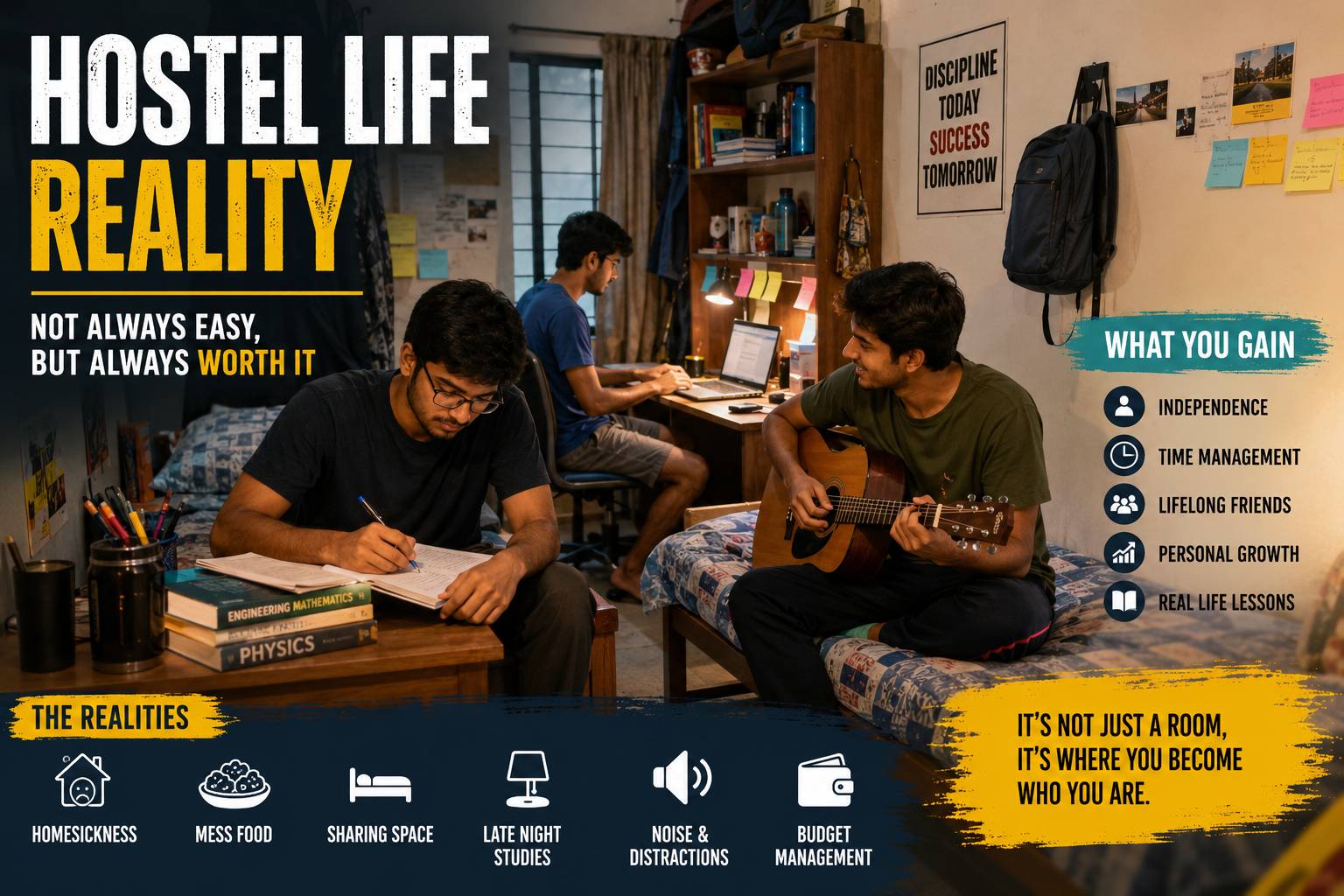
By Shatavisha Neogi | Published on 5/20/2026
indian hostel life reality and college life

For millions of Indian students, securing admission to a college away from home is a dream come true. It represents independence, ambition, and the beginning of a new chapter. But alongside lectures, assignments, and campus placements comes another experience that shapes students just as deeply—hostel life. Ask any graduate what they remember most about college, and many will mention hostel memories before they mention classrooms. The midnight Maggi sessions, the endless conversations, exam-night panic, shared struggles, and friendships built over years become part of a story that lasts a lifetime.

However, hostel life is not always as glamorous as social media posts or Bollywood films suggest. It is not just about freedom and fun. It is about learning to live with strangers, handling homesickness, adjusting to new food habits, managing expenses, and balancing academics with personal responsibility. For some students, hostel life becomes the best phase of their lives. For others, the transition can be emotionally and physically challenging. The reality lies somewhere in between.

This detailed guide explores the real hostel life experience in India and explains what every student should know before moving to campus.

Hostel Life in India: A Dream with a Reality Check

Most students imagine hostel life as:

  • Unlimited freedom
  • Late-night fun with friends
  • No parental supervision
  • Campus festivals and outings
  • A highly social lifestyle

And while all of that does happen, there is another side:

  • Shared bathrooms
  • Limited privacy
  • Mess food that may not suit your taste
  • Roommate conflicts
  • Strict hostel rules
  • Academic pressure
  • Emotional adjustment

Hostel life is a combination of freedom and responsibility. The students who understand this early usually enjoy the experience the most.

Expectations vs Reality of Hostel Life

Expectation Reality
I will have complete freedom. Freedom exists, but hostel rules and academic responsibilities still apply.
I will make best friends instantly. Friendships take time and mutual understanding.
Hostel food will be fine. Food quality varies and may take time to adjust to.
I will study more efficiently. Distractions can significantly reduce productivity.
Life will be exciting every day. Some days are fun, others are stressful and lonely.
Homesickness will disappear quickly. Adjustment can take weeks or even months.

The First Day: Excitement Mixed with Anxiety

Moving into a hostel is a highly emotional moment. Parents help arrange the room, unpack essentials, and offer final advice. When they leave, many students experience a sudden realization: they are now responsible for themselves. The first few nights can feel strange. New surroundings, unfamiliar faces, and uncertainty about what lies ahead often create a mix of excitement and nervousness. This emotional adjustment is completely normal.

Homesickness: The Hidden Challenge

One of the most common realities of hostel life is homesickness.

Even students who are enthusiastic about independence may miss:

  • Family members
  • Home-cooked meals
  • Personal routines
  • Familiar surroundings
  • Emotional comfort

Signs of Homesickness

  • Feeling lonely
  • Lack of motivation
  • Frequent calls home
  • Trouble sleeping
  • Loss of appetite

Practical Ways to Cope

  • Give yourself time to adjust
  • Build a daily routine
  • Participate in hostel activities
  • Talk to roommates and classmates
  • Stay connected with family without becoming overly dependent

Most students begin to feel more comfortable within a few weeks.

Roommates: Strangers Who May Become Family

Roommates are one of the most influential aspects of hostel life. Some become lifelong friends. Others test your patience.

Common Sources of Conflict

  • Different sleep schedules
  • Cleanliness habits
  • Noise levels
  • Sharing belongings
  • Visitors in the room

Tips for Peaceful Coexistence

  • Communicate openly
  • Respect personal boundaries
  • Keep shared areas clean
  • Discuss expectations early

Learning to live with different personalities is one of the most valuable life lessons hostel life provides.

The Reality of Hostel Rooms

Hostel rooms are generally functional rather than luxurious. Depending on the institution, students may be assigned:

  • Single occupancy rooms
  • Double-sharing rooms
  • Triple-sharing rooms
  • Dormitory-style accommodation

What to Expect

Feature Typical Reality
Space Compact but manageable
Furniture Bed, cupboard, study table, chair
Air Conditioning Rare in many government hostels
Bathrooms Often shared
Storage Limited
Maintenance Varies by institution

Mess Food: The Most Discussed Topic

If hostel life had a central theme, food would be a top contender.

The Typical Experience

In the first week, the food may seem acceptable. Over time, repetitive menus can become tiring.

Common student complaints include:

  • Lack of variety
  • Too much oil
  • Limited regional taste preferences
  • Fixed meal timings

The Positive Side

Mess food is generally economical, convenient, and nutritionally adequate.

Survival Strategies

  • Keep fruits and dry snacks in your room
  • Stay hydrated
  • Eat outside occasionally
  • Avoid excessive junk food

Typical Hostel Food Schedule

Feature Typical Reality
Space Bed, cupboard, study table, chair
Air Conditioning Rare in many government hostels
Bathrooms Often shared
Storage Limited
Maintenance Varies by institution

Students quickly learn to make small spaces feel like home.

Freedom: Exciting but Easy to Misuse

For many students, hostel life is their first taste of true independence. No one wakes you up, reminds you to study, or monitors your schedule. This freedom can be empowering—or dangerous if mismanaged.

Common Pitfalls

  • Staying up too late
  • Skipping classes
  • Gaming addiction
  • Excessive social media use
  • Poor eating habits

Successful Hostel Students Usually

  • Follow a routine
  • Attend classes consistently
  • Balance fun and academics
  • Take responsibility for their health


Freedom: Exciting but Easy to Misuse

For many students, hostel life is their first taste of true independence.

No one wakes you up, reminds you to study, or monitors your schedule.

This freedom can be empowering—or dangerous if mismanaged.

Common Pitfalls

  • Staying up too late
  • Skipping classes
  • Gaming addiction
  • Excessive social media use
  • Poor eating habits

Successful Hostel Students Usually

  • Follow a routine
  • Attend classes consistently
  • Balance fun and academics
  • Take responsibility for their health

Academic Pressure Is Real

Freedom: Exciting but Easy to Misuse

For many students, hostel life is their first taste of true independence.

No one wakes you up, reminds you to study, or monitors your schedule.

This freedom can be empowering—or dangerous if mismanaged.

Common Pitfalls

  • Staying up too late
  • Skipping classes
  • Gaming addiction
  • Excessive social media use
  • Poor eating habits

Successful Hostel Students Usually

  • Follow a routine
  • Attend classes consistently
  • Balance fun and academics
  • Take responsibility for their health

Academic Pressure Is Real

Hostel life does not reduce academic expectations. In many cases, the absence of family supervision requires greater self-discipline.

Major Academic Challenges

  • Procrastination
  • Peer distractions
  • Last-minute preparation
  • Competitive environment

Smart Study Strategies

  • Set weekly goals
  • Use library study hours
  • Form study groups
  • Review concepts regularly
Monthly Budget Management

Hostel life teaches financial discipline.

Expense Category Estimated Monthly Cost
Snacks and beverages ₹1,000–₹3,000
Laundry ₹300–₹1,000
Mobile recharge ₹200–₹600
Travel ₹500–₹2,000
Personal care ₹500–₹1,500
Entertainment ₹500–₹3,000

Budgeting Tips

  • Track expenses
  • Avoid impulse purchases
  • Set spending limits
  • Keep an emergency reserve

Health and Hygiene: Often Overlooked

Many students underestimate how important health management becomes in a hostel.

Common Issues

  • Irregular sleep
  • Poor diet
  • Seasonal illnesses
  • Stress

Healthy Habits

  • Sleep 7–8 hours
  • Drink sufficient water
  • Exercise regularly
  • Keep your room clean
  • Carry basic medicines

Hostel Rules: More Structure Than Students Expect

Contrary to popular belief, most hostels have clear regulations.

Common Rules

  • Entry and exit timings
  • Attendance requirements
  • Visitor restrictions
  • Noise limitations
  • Anti-ragging compliance

Following rules ensures a smooth and secure stay.

Internet and Technology Reality

Wi-Fi is essential for students, but hostel internet can be inconsistent.

Common Issues

  • Slow speeds during peak hours
  • Connectivity interruptions
  • Limited bandwidth

Keeping mobile data as backup is always advisable.

Friendships That Last a Lifetime

The strongest part of hostel life is often the people.

Friends support each other through:

  • Exams
  • Breakups
  • Career decisions
  • Personal challenges

These shared experiences build unusually strong bonds.

Cultural Diversity in Indian Hostels

Students from different states and backgrounds live together under one roof.

This creates opportunities to:

  • Learn new languages
  • Understand different traditions
  • Expand perspectives

For many students, this diversity becomes one of the most enriching aspects of college life.

Safety and Security

Students should prioritize personal safety.

Essential Safety Practices

  • Lock valuables
  • Save emergency contacts
  • Avoid sharing sensitive information
  • Report suspicious activity

Ragging: Know Your Rights

Ragging is prohibited and punishable.

If any incident occurs, students should immediately contact:

  • Hostel warden
  • Anti-ragging committee
  • College administration
  • National Anti-Ragging Helpline

Emotional Growth and Personal Transformation

Hostel life teaches resilience.

Students learn to:

  • Solve problems independently
  • Adapt to unfamiliar situations
  • Manage stress
  • Build confidence

By graduation, most students are far more self-reliant than when they arrived.

What to Pack for Hostel

Essentials Checklist

Category Category
Documents ID cards, admission papers
Bedding Bedsheets, pillow, blanket
ToiletriesSoap, shampoo, towel
Electronics Charger, extension board, power bank
Study Materials Laptop, notebooks
Health Medicines, first-aid kit
Security Locks and spare keys

Advantages of Hostel Life

  • Builds independence
  • Improves social skills
  • Creates lifelong friendships
  • Teaches financial discipline
  • Strengthens adaptability

Challenges of Hostel Life

  • Homesickness
  • Food adjustment
  • Shared living issues
  • Academic distractions
  • Limited privacy

Who Should Choose Hostel Life?

Hostel life is ideal for students who want:

  • Complete campus immersion
  • Better access to academic resources
  • Greater independence
  • Networking opportunities

Students who strongly prefer privacy and family support may find the transition more difficult initially.

Expert Tips for New Hostel Students

  1. Keep an open mind.
  2. Respect roommates and staff.
  3. Maintain a routine.
  4. Prioritize academics.
  5. Take care of your health.
  6. Manage your finances.
  7. Ask for help when needed.
  8. Participate in campus activities.
  9. Stay connected with family.
  10. Enjoy the journey.

Hostel life in India is a powerful and transformative experience. It is not always comfortable, and it is rarely perfect. There will be days of homesickness, frustration, and stress. There will also be days filled with laughter, friendship, growth, and unforgettable memories. The reality is that hostel life teaches lessons that extend far beyond textbooks. It develops maturity, resilience, and independence in ways few other experiences can. Students who approach hostel life with realistic expectations and a willingness to adapt often look back on it as one of the most meaningful chapters of their lives. In the end, hostel life is not just about where you stay during college—it is where you discover who you are.

always stay updated on: Collegereviewz.com

Frequently Asked Questions

Is hostel life good for students?

Yes, hostel life is highly beneficial for most students. It helps develop independence, time management, social skills, and emotional maturity. Students also build strong friendships and learn to live with people from different backgrounds.

What are the biggest challenges of hostel life?

The most common challenges include homesickness, adjusting to hostel food, sharing rooms, maintaining discipline, and balancing studies with social life.

How long does it take to adjust to hostel life?

Most students take two to six weeks to adjust. The first few days may feel uncomfortable, but students usually settle in after making friends and establishing a routine.

Is hostel food healthy?

Hostel food is generally hygienic and nutritionally balanced, but the menu can be repetitive. Many students supplement meals with fruits, snacks, and occasional outside food.

Does hostel life improve academic performance?

It can. Living close to classmates, libraries, and faculty often supports group study and better time utilization. However, success depends on self-discipline.

What is the average cost of hostel living in India?

Hostel fees vary widely. Government college hostels may cost ₹20,000–₹80,000 per year, while private universities can charge ₹80,000–₹5,00,000 or more annually.

Are Indian college hostels safe?

Most reputable institutions provide CCTV surveillance, security guards, wardens, biometric entry, and anti-ragging committees to ensure student safety.

What essential items should students carry to a hostel?

Students should bring clothes, toiletries, bedsheets, towels, medicines, locks, chargers, power banks, and important academic and identity documents.

Is ragging still a problem in hostels?

Ragging is strictly prohibited in India. Colleges have anti-ragging cells and severe penalties. Students should report any incident immediately.

Can students leave the hostel whenever they want?

That depends on the institution. Many colleges have entry and exit timings, visitor policies, and permission requirements, especially for first-year students.

How much pocket money does a hostel student need?

A student usually needs ₹3,000 to ₹7,000 per month for snacks, laundry, transport, and personal expenses, depending on lifestyle and city.

Is hostel life better than staying in a PG or rented flat?

Hostels are generally safer and more affordable, with food and security included. PGs and rented flats may offer more freedom but involve higher costs and additional responsibilities.