Highest Package vs Reality: The Truth Behind College Placement Claims
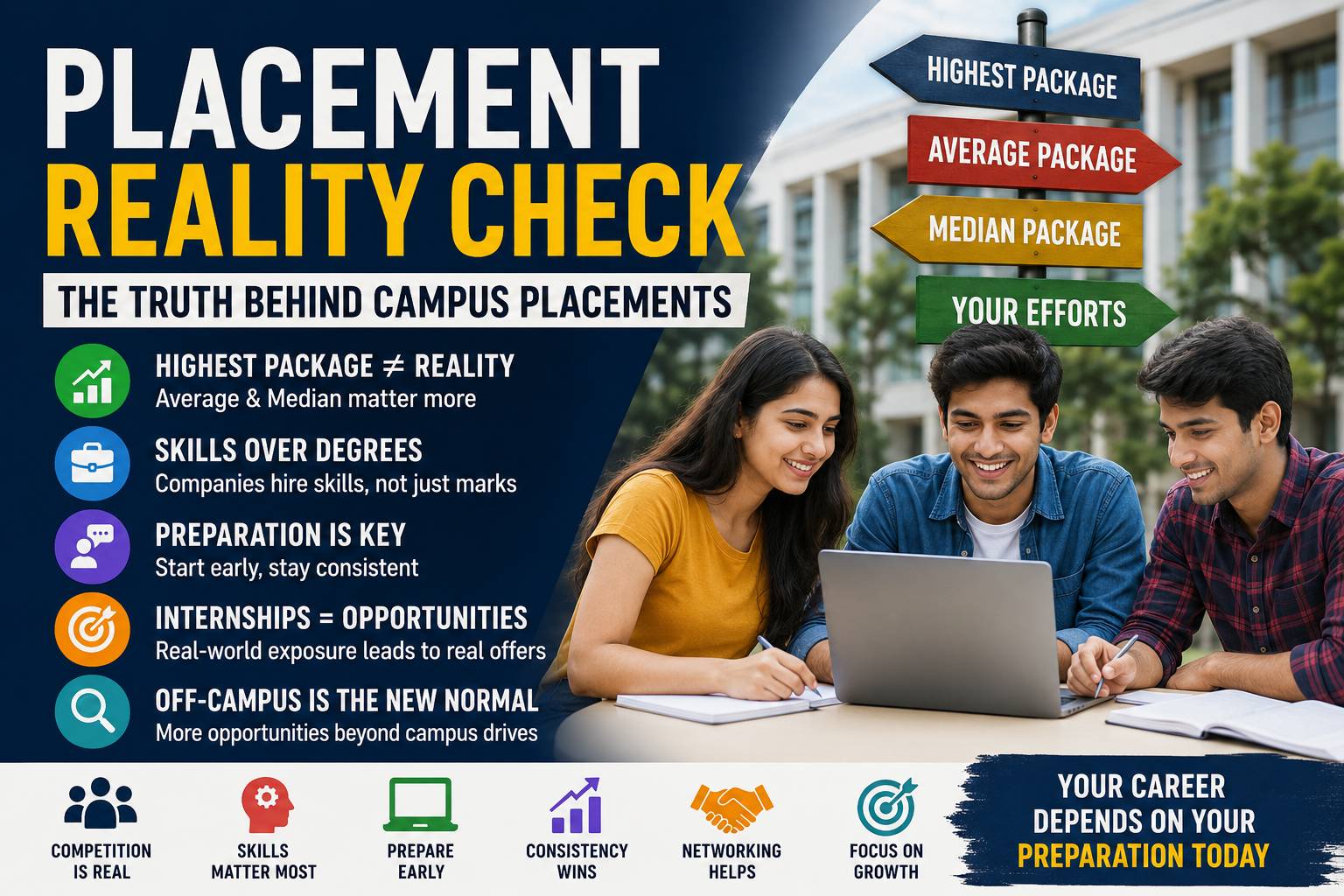
Every year, millions of students in India select colleges based on one powerful promise: “100% Placement.” Brochures highlight glossy salary packages. Websites display logos of multinational companies. Admission counsellors speak confidently about lucrative careers and impressive placement records. For students and parents, these claims can be highly persuasive. A college that advertises strong placements often appears to be the safest investment. But here is the reality: placement statistics can be misleading if you do not understand what they actually represent. Before you choose a college—whether for engineering, MBA , MBBS, law, or any other professional course—you need to know the truth behind campus placements. This guide explains how placement data works, what colleges may not tell you, and how to evaluate the real return on investment (ROI) of your education.
Why Placements Matter So Much
For most families, higher education is a significant financial commitment. Tuition fees, hostel charges, books, coaching, and living expenses can add up to several lakhs. Naturally, students want reassurance that this investment will lead to stable and rewarding career opportunities. This is why placement records often become the deciding factor during admissions. However, placement figures should be interpreted carefully—not accepted at face value.
The “100% Placement” Myth
When a college claims 100% placement, it sounds ideal. But the statement may not mean that every student received a high-paying job.
In reality, it may include:
- Students who accepted internships
- Low-paying or temporary roles
- Off-campus opportunities facilitated by the college
- Multiple offers received by the same student
- Students who were eligible and opted into placements, not the entire batch
Example
Suppose a college has 300 students:
- 50 students pursue higher studies.
- 30 students start businesses.
- 20 students are not eligible due to academic backlogs.
- 200 students sit for placements.
- All 200 receive offers.
The college may advertise 100% placement, even though not every enrolled student secured a job.
Highest Package vs Average Package
Students are often impressed by a headline such as: “Highest Package: ₹50 LPA". While this is noteworthy, it may represent a single exceptional offer. A more realistic indicator is the average or median salary.
Sample Placement Distribution
| Metric | Value |
| Highest Package | ₹50 LPA |
| Average Package | ₹6.5 LPA |
| Median Package | ₹5.8 LPA |
| Lowest Package | ₹3.2 LPA |
Why Median Package Matters More
The median salary reflects the middle value of all offers and is less affected by unusually high packages.
Simplified Example
Salaries offered to five students:
₹4 LPA, ₹5 LPA, ₹6 LPA, ₹7 LPA, ₹40 LPA
- Average: ₹12.4 LPA
- Median: ₹6 LPA
The median provides a more accurate picture of what a typical student can expect.
Not Every Student Gets Dream Roles
Campus placements usually include a wide range of roles and salary levels. Some students secure premium positions in consulting, finance, or technology, while many receive entry-level offers.
Typical Salary Distribution
| Student Category | Likely Salary Range |
| Top performers | ₹15–40+ LPA |
| Above-average students | ₹7–15 LPA |
| Average students | ₹4–7 LPA |
| Minimum package offers | ₹3–4 LPA |
Your outcome depends significantly on your skills, internships, communication ability, and academic performance.
College Brand Helps, But Skills Decide Outcomes
A reputed college can open doors, but it does not guarantee success.
Recruiters evaluate:
- Communication skills
- Technical knowledge
- Analytical thinking
- Internship experience
- Leadership potential
- Attitude and professionalism
Students who actively build their profiles often outperform peers regardless of institution.
Core vs Non-Core Placements
This is especially important for engineering students.
A Mechanical Engineering graduate may be placed in:
- Core manufacturing roles
- IT services
- Sales and business development
- Operations roles
All of these count as placements, but they differ greatly in relevance to the student’s original field.
Questions to Ask
- What percentage of students are placed in core roles?
- Which companies recruit for my specialization?
- What is the average package for those core roles?
Internship Opportunities Matter
Strong internship programs often lead to pre-placement offers (PPOs).
A college with high-quality internship partnerships usually provides better long-term career outcomes.
Indicators of a Good Internship Ecosystem
- Mandatory internships
- Corporate mentors
- Stipend opportunities
- PPO conversion rates
Placement Reports Can Be Selective
Colleges naturally highlight their strongest achievements.
Before making a decision, verify:
- Official placement reports
- Median salary figures
- Batch size
- Number of participating recruiters
- Independent student reviews
- Alumni outcomes on LinkedIn
| College | Total Cost | Average Package | ROI Outlook |
| Government College | ₹2 lakh | ₹8 LPA | Excellent |
| Private College | ₹15 lakh | ₹7 LPA | Moderate |
| Premium Institute | ₹25 lakh | ₹30 LPA | Strong |
A lower-cost college with solid placements can be financially superior to an expensive institution with average outcomes.
Branch Matters as Much as College
The same institution can produce very different outcomes across disciplines.
For example:
- Computer Science may have significantly higher salaries.
- Civil or Biotechnology may have fewer premium recruiters.
- MBA specializations vary by market demand.
Evaluate placement data specific to your intended course.
Student Effort Is the Biggest Variable
Two students from the same college can have dramatically different career outcomes.
Students Who Typically Perform Best
- Complete internships early
- Build practical skills
- Participate in competitions
- Network with alumni
- Prepare consistently for interviews
The Role of Alumni Networks
A strong alumni base often improves mentorship, internships, and job referrals. Look for institutions where alumni hold influential positions across industries.
Placements Are a Starting Point, Not the Destination
Your first job matters, but long-term career growth depends on:
- Continuous learning
- Performance at work
- Adaptability
- Professional networking
A modest first salary does not limit future success.
Placement Truth for Different Courses
Engineering
Focus on branch-wise data, internship support, and core vs non-core roles.
MBA
Evaluate average and median salary, recruiter quality, and specialization outcomes.
Medical
Campus placements are less relevant; assess clinical exposure and postgraduate preparation.
Law
Review internships, moot court culture, and law firm hiring trends.
Real Student Perspective
Students often discover that:
- Placements are competitive.
- Preparation matters more than assumed.
- Soft skills are crucial.
- College reputation helps but does not replace effort.
Those who proactively build skills tend to benefit the most.
How to Verify Placement Claims
Use Multiple Sources
- Official placement reports
- Alumni LinkedIn profiles
- Student review platforms
- YouTube interviews and campus discussions
What to Validate
- Consistency of recruiter names
- Salary ranges across roles
- Recent alumni career progression
- Final Checklist Before Choosing a College
| Factor | Why It Matters |
| Median Package | Shows typical outcomes |
| Total Fees | Determines ROI |
| Internship Support | Leads to better placements |
| Alumni Network | Improves mentoring and referrals |
| Recruiter Quality | Reflects employer confidence |
| Course Strength | Impacts specialization outcomes |
| Student Reviews | Provides practical insights |
Placement statistics are important, but they should be interpreted with context. A college is not automatically the right choice because it advertises a high package or “100% placement.” The true value lies in the combination of academic quality, internships, alumni support, affordability, and your own willingness to work hard. Before committing to any institution, look beyond promotional claims. Study the median salary, understand the total cost, and evaluate whether the college aligns with your career goals. The best college is not necessarily the one with the biggest headline package—it is the one that offers the strongest long-term value for your future.
always stay updated on: collegereviewz.com
Frequently Asked Questions
Is the highest package a good indicator of college quality?
No. The median package and placement percentage are more reliable metrics.
What is a good average package for engineering graduates?
For many colleges, ₹4–8 LPA is considered a solid starting range.
Can Tier-3 college students get high-paying jobs?
Yes, through strong skills, internships, and off-campus applications.
Do all students get placed?
No. Placement depends on eligibility and performance.
What matters more: CGPA or skills?
Both are important, but skills increasingly carry more weight.
Are internships necessary?
Yes. They significantly improve employability.
Which branch offers the best placement opportunities?
Computer Science and IT generally lead.
Is MBA placement guaranteed?
No. Outcomes depend on institute quality and student performance.
How can I improve my placement chances?
Prepare early, complete internships, and strengthen communication skills.
Should I rely only on campus placements?
No. Apply off-campus simultaneously for better opportunities.